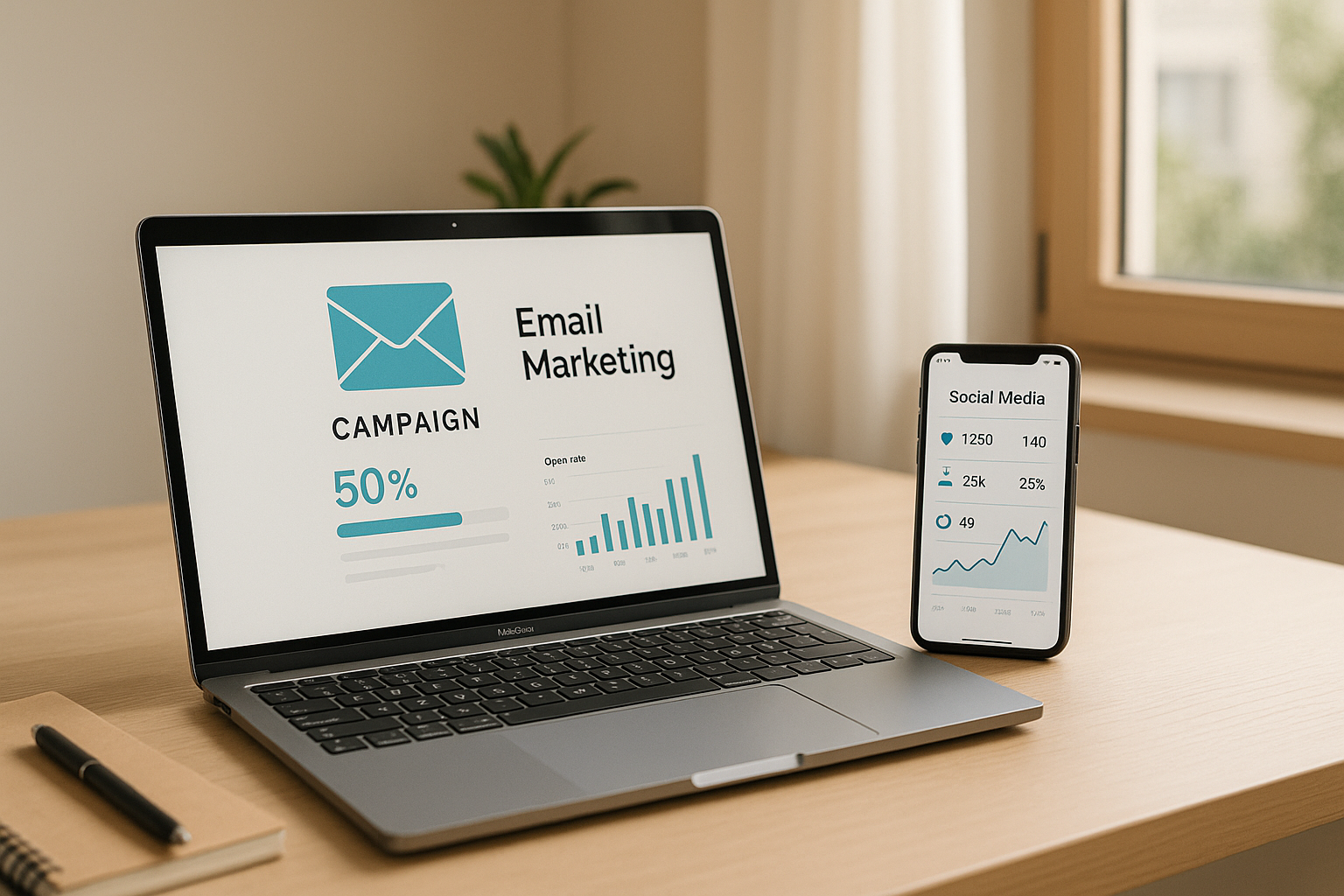

In 2025, businesses face a critical choice between email marketing and social media to maximize ROI. Here’s the bottom line:
- Email marketing delivers higher ROI: $36 for every $1 spent, compared to social media’s $2.80. It excels in driving conversions, personalization, and maintaining long-term customer relationships.
- Social media shines in brand awareness: It helps attract new audiences, with 76% of consumers discovering brands through platforms like Instagram and TikTok. However, ROI is more variable due to algorithm changes and ad competition.
Key Takeaways:
- Email is best for direct conversions and nurturing existing customers.
- Social media is ideal for visibility, engagement, and reaching new audiences.
- Combining both channels amplifies results, with social media driving email sign-ups and email boosting conversions.
Quick Comparison:
| Metric | Email Marketing | Social Media |
|---|---|---|
| Average ROI | $36 per $1 spent | $2.80 per $1 spent |
| Reach Control | Direct to inbox | Algorithm-dependent |
| Personalization | Highly targeted | Limited |
| Cost | Predictable after list growth | Fluctuates with ad competition |
| Conversion Rates | High | Lower |
| Best For | Conversions, retention | Awareness, new audience acquisition |
To succeed in 2025, use email for immediate results and social media for expanding your reach. Together, they create a balanced, effective strategy.
Email Marketing ROI: Metrics and 2025 Trends
Email marketing continues to deliver impressive ROI in 2025. Its ability to land directly in inboxes creates a straightforward path for tracking performance and optimizing results. Let’s break down the metrics and strategies driving this success.
Performance Metrics for Email Marketing
The success of an email campaign boils down to a few key metrics:
- Open rates: These reveal how enticing your subject lines are and reflect the sender’s reputation.
- Click-through rates: A measure of how engaging and relevant your email content is.
- Conversion rates: This tracks how well your email drives recipients to take a specific action, like making a purchase or signing up.
- Revenue per email: A direct indicator of how much each email contributes to your bottom line.
- List growth rate: A measure of how well you’re expanding your reach and maintaining long-term ROI.
What Fuels High ROI?
Several strategies help email marketing stand out as a revenue generator:
- Personalization and segmentation: Tailoring emails based on customer data leads to better engagement and higher returns.
- Automation: Sending timely, relevant messages keeps your campaigns efficient and impactful.
- Mobile optimization: Responsive designs ensure that emails look great and convert well on any device.
- Data ownership: Having full control over your email lists ensures consistent communication and reliability.
How Industries Leverage Email Marketing
Email marketing performs differently across industries, but its adaptability makes it a go-to tool for many:
- E-commerce: Targeted product recommendations and seasonal campaigns drive direct sales.
- B2B: Lead nurturing sequences guide prospects through longer sales cycles, turning them into ready-to-buy customers.
- SaaS: Emails play a dual role in acquiring new customers and retaining existing ones. Onboarding emails, in particular, help reduce churn and encourage upgrades.
- Healthcare and wellness: Trusted for its privacy, email is used for patient education, appointment reminders, and other sensitive communications.
- Financial services: Personalized advice and trust-building messages keep customers engaged and help them make informed decisions.
These metrics and strategies highlight why email marketing remains a top choice for ROI, even as businesses compare its effectiveness to social media.
Social Media ROI: Metrics and 2025 Trends
Measuring social media ROI isn’t as straightforward as tracking email marketing performance. It requires a deeper dive into how audiences interact with your content and how those interactions translate into actual business results in 2025.
Performance Metrics for Social Media
When it comes to social media, success isn’t just about racking up likes and shares. The metrics that truly matter for ROI dig deeper into your audience’s behavior:
- Reach and impressions tell you how many people are seeing your content.
- Engagement rates – measured through comments, shares, and saves – show how well your posts resonate with your audience.
- Click-through rates (CTR) track how effective your posts are at driving traffic to your website or landing pages.
For a clearer picture of ROI, conversion tracking is essential. This means following a user’s journey from their first interaction on social media all the way to a purchase or sign-up. Another key metric, cost per acquisition (CPA), helps you calculate how much you’re spending to gain each new customer via social platforms.
Share of voice is another important factor, measuring how much of the industry conversation your brand commands compared to competitors. Meanwhile, sentiment analysis dives into whether people are talking about your brand positively, negatively, or neutrally – something that can significantly influence long-term ROI.
The rise of short-form video content has also introduced new metrics to monitor, such as video completion rates, replay rates, and time watched. For brands working with influencers, earned media value and influencer engagement rates provide a way to evaluate the success of those partnerships.
These metrics are the foundation for understanding what drives social media ROI and how to measure it effectively.
Factors That Affect ROI
Beyond the numbers, several factors shape the success of social media ROI:
Platform algorithms play a huge role in determining visibility. A single algorithm update can drastically affect organic reach, making it harder for brands to rely solely on unpaid posts. To stay ahead, it’s crucial to understand each platform’s preferences and adjust your content strategy accordingly.
The quality of your visual content also has a direct impact on engagement and ROI. High-quality images, videos, and graphics consistently outperform text-heavy posts. At the same time, authentic, user-generated content – like real customer stories – has become a powerful tool, often outperforming polished marketing materials.
Building an engaged community offers long-term benefits that are harder to quantify but incredibly valuable. Loyal followers often become brand advocates, reducing customer acquisition costs and boosting lifetime value. Timing matters too: the frequency and timing of your posts can affect visibility and engagement, and the ideal schedule varies by platform and audience.
Cross-platform integration is another big factor. When brands align their social media efforts with email campaigns, website content, and even offline marketing, they create a consistent message that amplifies results.
Finally, social commerce has made direct purchasing through platforms like Instagram and Facebook more common. Features such as Instagram Shopping and Facebook Marketplace have shortened the customer journey, making it easier to connect engagement directly to revenue.
Industry-Specific Results
Social media ROI isn’t one-size-fits-all. Different industries see varied results depending on their audiences and goals.
- Retail and e-commerce brands thrive on visual platforms like Instagram and Pinterest. Fashion brands, for instance, use influencer partnerships and user-generated content to showcase products in real-world scenarios, while beauty brands rely on tutorials and before-and-after posts to demonstrate product effectiveness.
- Entertainment and media companies use social platforms to build buzz around new releases. Behind-the-scenes content and interactive posts keep audiences engaged between major launches and deliver strong ROI.
- Hospitality and travel businesses excel with visual storytelling. Stunning photos of destinations and customer-generated content act as testimonials that drive bookings. Real-time engagement during events or peak seasons can also boost immediate returns.
- B2B companies often see the most success on LinkedIn. Professional service firms share educational content to highlight their expertise, while software companies use case studies and customer success stories to build trust and generate leads.
- Food and beverage brands benefit from recipe posts, behind-the-scenes content, and user-generated photos featuring their products. Local restaurants and food trucks, in particular, use social media for real-time promotions and location updates.
- Healthcare and wellness brands focus on educational content and fostering communities, though they must carefully navigate regulations around health claims. Fitness brands, for example, see great results with transformation stories and workout videos that encourage user participation.
These insights underline the importance of tailoring social media strategies to fit your industry and audience. By aligning your efforts with platform preferences and content habits, you can maximize ROI in 2025.
sbb-itb-939d0c4
Email Marketing vs Social Media ROI Comparison
Let’s dive into how email marketing and social media stack up when it comes to ROI. Both channels offer unique advantages, but understanding their key metrics side by side can help guide smarter budget decisions.
Email Marketing vs Social Media: Metrics Comparison
Email marketing and social media operate differently, and their performance metrics highlight these distinctions. Here’s a quick snapshot of how they compare:
| Metric | Email Marketing | Social Media |
|---|---|---|
| Average ROI | Consistently high with steady returns | More variable, depending on campaign strategy |
| Reach Control | Direct, inbox-based delivery with user permission | Visibility depends on platform algorithms |
| Personalization | Highly targeted and segmented | Limited personalization options |
| Cost Structure | Predictable after building a subscriber list | Fluctuates due to ad competition and platform changes |
| Data Ownership | Full control over subscriber data | Governed by platform policies |
| Conversion Rates | Strong for engaged audiences | Generally lower direct conversions |
| Lifespan | Content stays relevant longer | Organic posts have a shorter shelf life |
This comparison highlights email marketing’s strength in delivering steady conversions to an engaged audience, while social media shines in building visibility and brand awareness. Email costs remain stable once a list is established, whereas social media costs can vary due to factors like competition, seasonality, and algorithm updates.
Benefits of Combining Email and Social Media
The real magic happens when email marketing and social media work together. Many brands seamlessly integrate the two to maximize their strengths. Here’s how:
- Cross-platform retargeting: Reuse content across channels to engage customers at multiple touchpoints, ensuring consistent messaging and less effort in content creation.
- Building social proof: Include user-generated content from social platforms in your emails to boost credibility, and encourage email subscribers to share their experiences on social media.
- Expanding your email list: Use social media to promote your email content, driving new sign-ups and growing your audience.
- Event coordination: Social media creates buzz and anticipation for launches, while email delivers exclusive offers and detailed follow-ups to deepen engagement.
By combining these channels, brands can create a more cohesive and effective marketing strategy that leverages the strengths of both.
Channel Selection by Industry and Goals
Choosing between email marketing and social media – or deciding how to balance them – depends heavily on your industry and goals. Here’s a breakdown:
- E-commerce and retail: Email marketing drives repeat purchases with targeted campaigns, while social media attracts new customers and showcases products.
- B2B companies: Email supports nurturing with detailed, long-form communication, while professional social platforms like LinkedIn help establish authority and thought leadership.
- Local service businesses: Social media excels at location-based targeting to attract new customers, while email keeps existing customers engaged.
- Content creators: Social media builds an initial following, but email allows for deeper connections and monetization opportunities.
- Seasonal businesses: Social media captures attention during peak demand, while email builds relationships during slower periods.
The right balance depends on your specific goals. If immediate conversions are the priority, email marketing often takes the lead. For building long-term visibility and brand awareness, social media may deserve more focus. A phased approach – starting with one channel and gradually adding the other – can also be a smart way to grow sustainably. By understanding these dynamics, businesses can make informed decisions to maximize ROI.
Tools and Strategies for Maximum ROI
Getting the most out of your marketing efforts means using the right tools and strategies to fine-tune your email and social media campaigns. Here’s how to make it happen.
Tools for Campaign Management and Tracking
Email Marketing Platforms are now packed with powerful tracking features. For example, Mailchimp offers analytics and A/B testing to optimize performance. If you’re managing larger campaigns, Klaviyo provides advanced segmentation and behavioral triggers, while ConvertKit is excellent for creating smooth automation workflows.
Social Media Management Tools can make life easier by simplifying scheduling and analytics. Tools like Hootsuite and Buffer handle the basics, while Sprout Social dives deeper into engagement insights. If tracking your social ROI is a priority, platforms like Socialbakers (now Emplifi) deliver detailed performance metrics.
Analytics and Attribution Tools bring everything together. Google Analytics 4 and Triple Whale allow you to track user journeys across multiple channels, from discovery to conversion.
For a more unified approach, consider Battle Bridge’s funnel optimization services. They integrate email and social strategies with advanced tracking, helping you pinpoint which touchpoints deliver the best ROI and guiding smarter budget decisions.
Once your tools are set, it’s time to sharpen your email strategy for better results.
Email Campaign Optimization
Segmentation strategies are key to improving email ROI. By grouping audiences based on behaviors like purchase history, website activity, and engagement levels, you can craft personalized messages that resonate more effectively.
Automation workflows take care of tasks like cart abandonment reminders, post-purchase follow-ups, and re-engagement campaigns. These automated, timely messages keep your brand top of mind.
Subject line optimization is another game-changer. Test different styles – urgency (“Hurry, only 24 hours left”), curiosity (“Guess what’s back in stock”), or personalization (“Hey Sarah, this is for you”) – to see what drives the most opens.
Mobile optimization ensures your emails look great on any device. Responsive designs are non-negotiable, especially as more users check emails on their phones.
Deliverability management safeguards your sender reputation. Regularly clean your email list, use double opt-ins, and monitor spam complaints to keep your messages out of junk folders and in front of your audience.
While email builds strong customer relationships, social media can amplify your reach and engagement.
Social Media Campaign Improvement
Short-form video content is dominating platforms like TikTok, Instagram Reels, and YouTube Shorts. Start with an attention-grabbing hook, deliver clear value, and end with a compelling call-to-action to keep viewers engaged.
User-generated content campaigns provide authentic social proof while cutting down on content creation costs. Encourage customers to share their experiences using branded hashtags or contests to generate relatable, high-performing content.
Influencer partnerships are shifting toward micro-influencers. These creators have smaller but highly engaged audiences, making them more effective for driving ROI compared to broader celebrity endorsements.
Social commerce integration turns posts into sales opportunities. Features like Instagram Shopping, Facebook Shops, and TikTok Shopping allow users to buy directly within the platform, reducing friction in the buying process.
Community building goes beyond broadcasting messages. Engaged groups on platforms like Facebook Groups, LinkedIn communities, or Discord servers create deeper connections with your brand, which can lead to higher customer loyalty and value over time.
Paid social optimization requires constant testing. Experiment with audience targeting, creative formats, and bidding strategies. Combining lookalike audiences (based on email subscriber data) with retargeting pixels can help you re-engage website visitors effectively.
Conclusion: ROI Maximization in 2025
When it comes to digital marketing in 2025, understanding which channels work best for your business can make or break your budget. The key lies in knowing how to balance and integrate these channels to achieve your goals.
Email vs. Social Media ROI Overview
The numbers speak for themselves: email marketing remains a powerhouse, delivering an average return of $36 for every $1 spent, compared to social media’s $2.80 for the same investment. Additionally, 77% of marketers rank email as their top ROI driver, while only 21% say the same for social media.
Email’s strength is in its ability to drive direct conversions. With average open rates steady at 21.5% across industries – and some sectors exceeding 30% – it’s clear why email is so effective.
Social media, on the other hand, excels in areas email struggles with. While organic reach is shrinking – Facebook averages 5.2%, Instagram 4%, and X (formerly Twitter) just 3% – social platforms are critical for brand discovery. In fact, 76% of consumers report finding new brands through social media. This makes it indispensable for growing awareness and attracting new audiences.
The takeaway? Email is ideal for nurturing relationships and driving direct sales, while social media builds visibility and draws in fresh leads. Successful strategies don’t pit these channels against each other – they combine their strengths for greater impact.
Steps to Boost ROI
To get the most out of your marketing efforts, consider these practical steps:
- Align channels with your goals. If retaining customers and increasing revenue are priorities, lean heavily on email. It’s the go-to tool for 81% of small businesses focused on customer retention.
- Combine email and social media. Use social media to grow your email list with tactics like lead magnets, contests, or exclusive offers. Then, nurture those leads with personalized email campaigns designed to convert.
- Automate and refine. Implement automation tools for workflows like cart abandonment emails or welcome sequences. Pair this with segmentation and A/B testing to fine-tune your messaging and boost performance across both channels.
- Prioritize mobile optimization. Ensure all emails and social content are mobile-friendly, as more users rely on their phones to engage with brands.
- Measure everything. Use tools like Google Analytics 4 to track customer journeys and identify which touchpoints deliver the best results. Services like Battle Bridge’s funnel optimization can help pinpoint where to allocate resources for maximum ROI.
In 2025, success comes from using email to drive direct results while leveraging social media to expand your reach. Together, these channels create a multiplier effect that can significantly enhance your bottom line.
FAQs
How can businesses combine email marketing and social media to boost ROI in 2025?
To get the most out of your marketing efforts in 2025, it’s smart to align your email marketing with your social media strategy. A great starting point? Add social sharing buttons to your emails. This simple step can help you expand your reach as subscribers share your content. On the flip side, use your social media platforms to encourage email sign-ups by offering perks like exclusive content or special promotions.
Want to take it further? Try running cross-platform campaigns, such as contests or giveaways. These can spark engagement and drive conversions on both email and social media.
Another effective tactic is to segment your email lists based on how your audience interacts on social media. This allows you to send more tailored content. And don’t overlook retargeting ads – using social media to re-engage email subscribers can keep your brand top of mind.
By combining the strengths of these two channels, you can connect with a broader audience, boost engagement, and see better results from your marketing efforts.
What are the most important metrics to measure the ROI of email marketing and social media campaigns?
To measure the success of email marketing, keep an eye on key metrics like open rates, click-through rates (CTR), conversion rates, bounce rates, unsubscribe rates, and overall return on investment (ROI). These numbers give you a clear sense of how well your emails are connecting with your audience and driving the desired outcomes.
When it comes to social media campaigns, focus on metrics such as audience growth, engagement rates (likes, comments, shares), and conversion rates. These indicators show how well your content is striking a chord with your audience and contributing to your broader marketing objectives.
By consistently tracking these metrics, you’ll gain valuable insights into how each channel is performing and can fine-tune your strategies to boost your financial results.
How do email marketing and social media strategies vary across different industries when it comes to ROI?
Email marketing and social media strategies deliver returns in different ways, depending on the industry.
Email marketing often thrives in areas like retail, eCommerce, and consumer goods. Why? Because it allows for personalized offers and direct communication that resonate with customers. On average, businesses in these sectors see about $45 in return for every $1 spent – making it a powerhouse for building customer loyalty and encouraging repeat purchases.
Meanwhile, social media tends to make a bigger splash for industries like B2B and local businesses. Platforms like LinkedIn and Facebook are perfect for experimenting with content, running targeted ads, and using social listening to engage specific audiences. These approaches work well for increasing brand visibility and building trust with niche groups.
In short, email marketing is your go-to for personalized connections, while social media is ideal for fostering engagement and boosting awareness. Both are essential tools, but their effectiveness depends on your industry and objectives.
Related posts
- 10 Common PPC Mistakes Hurting Your Campaign Performance
- B2B vs B2C Social Media Strategy: Key Differences
- Top 8 Marketing Automation Tools Compared for 2025
- 7 Proven Ways to Increase Landing Page Conversion Rates
