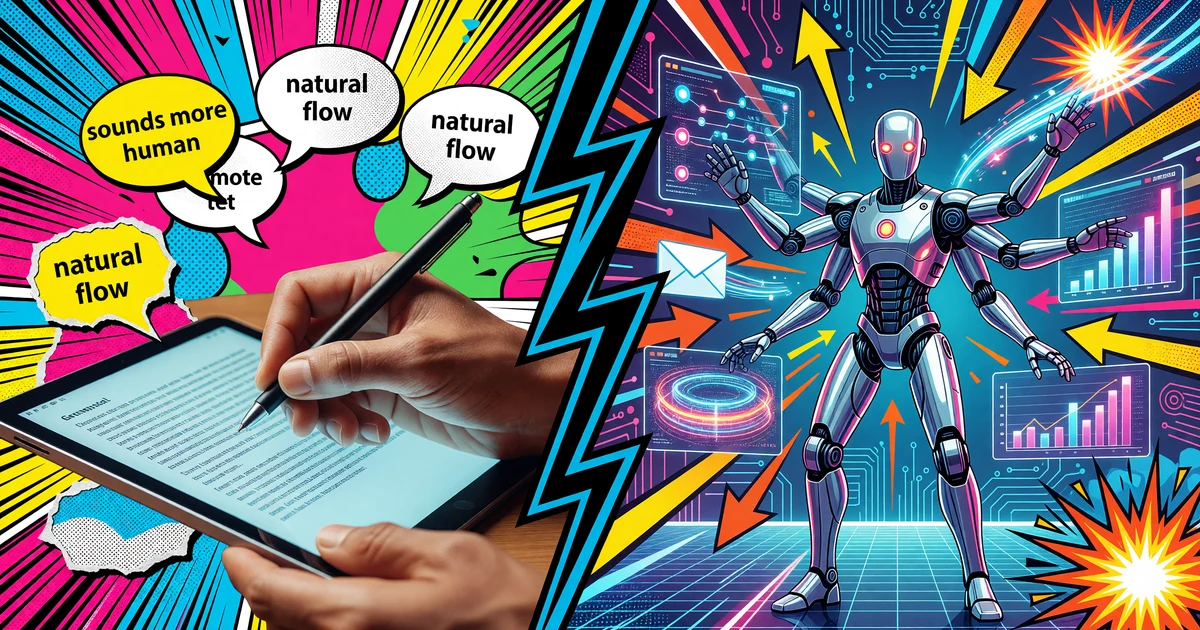
Free AI Humanizers vs. Autonomous Marketing Agents: Understanding the Strategic Difference
AI text humanizers improve surface-level writing quality by making ChatGPT output sound more natural. They change "utilize" to "use" and vary sentence structure to reduce robotic tone.
BattleBridge developed a different approach: autonomous AI agents that coordinate multi-step marketing workflows with minimal human oversight.
Here's how these approaches compare and when each makes strategic sense.
What AI Humanizer Tools Actually Do
AI text humanizers focus on post-processing content to improve readability:
- Replace formal vocabulary with conversational alternatives
- Vary sentence structure and length patterns
- Add transitional phrases and natural language markers
- Remove overly technical or repetitive phrasing
- Adjust tone to match target audience expectations
Where AI Humanizers Add Value
Content Polish: Effective for improving AI-generated blog posts, emails, and social media content before publication.
Tone Adjustment: Helpful when adapting formal AI outputs for casual brand voices or specific audience segments.
Quick Processing: Useful for teams producing high volumes of content that need consistent voice refinement.
Limitations of Text Humanization Tools
No Strategic Context: AI humanizers process individual pieces without understanding broader campaign objectives or business goals.
Workflow Isolation: They improve text quality but cannot integrate with publishing systems, CRM platforms, or analytics tools.
Manual Dependency: Each piece requires human review, tool processing, and quality verification before use.
BattleBridge's Autonomous Agent Architecture
We built systems that coordinate complete marketing functions rather than just improving text quality.
Multi-Agent Coordination Framework
Specialized Agents: Individual agents handle content creation, SEO optimization, CRM management, and performance analysis with defined expertise areas.
Workflow Integration: Agents communicate automatically. When content publishes, it triggers SEO optimization and CRM contact scoring without human intervention.
Context Awareness: The system maintains business objective understanding across all activities, ensuring individual tasks serve broader strategic goals.
Measurable Production Results
Our USR senior living directory case study (internal metrics, 12-month period):
- 977 city-specific pages created across 51 states
- 4,757 community listings catalogued and maintained
- 8,442 CRM contacts scored and segmented automatically
- Consistent optimization applied across all generated assets
- Integrated publishing managed without manual content review
Each page serves users and search algorithms through strategically planned content rather than post-processed AI output.
When to Use AI Humanizers vs. Autonomous Agents
Choose AI Text Humanizers When:
Volume Content Production: You generate significant content that needs consistent voice refinement before publication.
Existing Workflow Integration: Your team has established content creation, review, and publishing processes that work effectively.
Budget Constraints: Free AI humanizer tools provide immediate value for improving content quality without system integration costs.
Simple Use Cases: Your content needs are primarily blog posts, emails, or social media that don't require complex workflow coordination.
Choose Autonomous Agents When:
Scale Requirements: You need to manage multiple marketing functions simultaneously without proportional human resource increases.
Workflow Complexity: Your marketing involves coordinated activities across content, SEO, CRM, and analytics that benefit from automation.
Performance Optimization: You want systems that learn from results and adjust strategies based on actual conversion and engagement data.
Strategic Integration: Your content serves broader business objectives requiring context awareness beyond individual piece quality.
AI Humanization vs. Strategic Automation: A Comparison Framework
| Capability | AI Humanizer Tools | Autonomous Marketing Agents |
|---|---|---|
| Content Quality | Improve text naturalness | Plan content within strategic context |
| Workflow Integration | Manual process steps | Automated cross-platform coordination |
| Strategic Awareness | Individual piece focus | Campaign and business objective alignment |
| Scale Management | Linear human oversight required | Exponential output without proportional supervision |
| Learning Capability | Static processing rules | Performance-based strategy adjustment |
| Implementation Complexity | Immediate tool adoption | System design and agent deployment |
Real-World Implementation Examples
AI Humanizer Workflow
- Generate content with ChatGPT or similar tool
- Process through humanization software for tone improvement
- Manual review and editing for quality assurance
- Publish through existing content management systems
- Track performance through separate analytics platforms
Autonomous Agent Workflow
- Agent analyzes market data and identifies content opportunities
- Content creation integrates SEO optimization and brand voice automatically
- Publishing triggers CRM updates and social media distribution
- Performance monitoring feeds back into content strategy refinement
- System adjusts approach based on engagement and conversion data
The Strategic Context of AI Humanization
The term "humanization" itself reveals different philosophical approaches to AI implementation.
Surface-Level Humanization
Traditional AI humanizer tools make AI output sound more human-like through pattern matching and language substitution.
Strategic Humanization
Autonomous agents embody human decision-making processes by understanding context, coordinating complex tasks, and learning from results.
Both approaches address legitimate business needs but serve different strategic objectives.
Implementation Considerations for Marketing Teams
Budget and Resource Planning
AI Humanizer Tools: Lower initial cost, ongoing subscription fees, requires existing team bandwidth for processing and review.
Autonomous Agent Systems: Higher development investment, potential for significant human resource reallocation to strategic rather than execution tasks.
Technical Integration Requirements
Humanizer Tools: Minimal technical integration, fits into existing content workflows.
Agent Systems: Requires API connections, data integration, and workflow redesign across marketing platforms.
Performance Measurement
Humanizer Tools: Measure content quality improvement, publishing efficiency, and brand voice consistency.
Agent Systems: Track workflow automation, output volume, strategic objective achievement, and compound performance improvement over time.
The Future of AI in Marketing Operations
Marketing teams face a strategic choice between tool-based AI assistance and system-based AI autonomy.
Tool-Based Approach Benefits
- Immediate implementation with existing processes
- Lower technical complexity and integration requirements
- Human oversight maintains direct control over all outputs
- Predictable costs and resource requirements
System-Based Approach Benefits
- Compound efficiency gains through workflow automation
- Strategic consistency across all marketing activities
- Performance-based learning and optimization capabilities
- Scalable growth without proportional human resource increases
Choosing Your AI Marketing Strategy
The decision between AI humanizer tools and autonomous marketing agents depends on your organization's strategic objectives, technical capabilities, and growth plans.
For Content-Focused Teams
If your primary need is improving AI-generated content quality while maintaining existing workflows, AI text humanizers provide immediate value with minimal disruption.
For Growth-Focused Organizations
If you're managing complex marketing operations across multiple channels and platforms, autonomous agent systems offer strategic advantages through workflow coordination and performance optimization.
For Scalable Operations
If you plan significant growth in marketing output without proportional team expansion, autonomous systems provide compound efficiency benefits that compound over time.
BattleBridge's Autonomous Marketing Approach
Our agentic marketing methodology represents the strategic automation approach. Rather than post-processing AI outputs, we deploy systems that coordinate complete marketing functions autonomously.
The difference: Instead of making AI content sound human, we built AI systems that execute marketing strategies with human-level strategic judgment.
Ready to Explore Autonomous Marketing Systems?
If your team spends significant time managing AI tools rather than developing marketing strategy, discover how BattleBridge builds marketing systems that coordinate workflows and optimize performance autonomously.
The strategic question isn't whether your AI content sounds natural—it's whether your AI systems can execute complex marketing operations with strategic consistency.
Schedule a consultation to discuss autonomous agent implementation →
Choose the approach that serves your strategic marketing objectives: tool-based content improvement or system-based workflow automation.