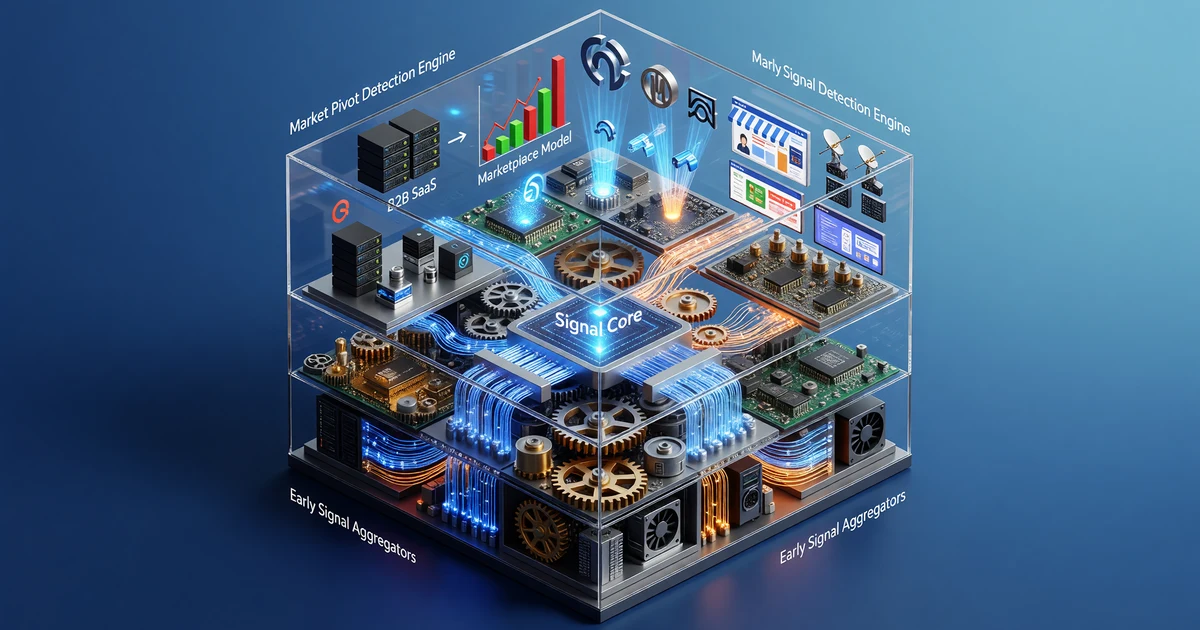
Our AI competitive intelligence system observed multiple signals suggesting a major competitor was pivoting from B2B SaaS to marketplace model approximately 30 days before their public announcement. This case study examines how systematic monitoring across website changes, hiring patterns, and content strategy provided early indicators that informed our client's strategic response.
The competitor's pivot represented a significant market shift that could have impacted our client—a healthcare technology company specializing in provider workflow automation—without advance preparation. The early signal detection enabled proactive messaging adjustments, product roadmap refinements, and competitive positioning before the official announcement.
Methodology: Multi-Source Signal Detection
Monitoring Framework
Our competitive intelligence system tracks signals across multiple data sources to identify meaningful patterns. For this analysis, we monitored:
- Website architecture and content changes through automated crawling
- Hiring activity across major job platforms
- Content strategy shifts in blogs, social media, and marketing materials
- Technical infrastructure modifications
Confidence in pattern significance increases when multiple signal types align within compressed timeframes. Individual changes might indicate routine updates; coordinated changes across channels often suggest strategic shifts.
Pattern Recognition Process
The system evaluates changes through several analytical layers:
- Change Detection: Identifies modifications across monitored properties
- Correlation Analysis: Maps relationships between different signal types
- Timeline Clustering: Groups related changes occurring within similar periods
- Significance Assessment: Evaluates whether patterns exceed normal variation
This methodology helps distinguish strategic pivots from routine business operations.
Signal Analysis: Website Infrastructure Changes Suggest Platform Development
Technical Architecture Modifications
Between March 15-22, our monitoring detected several website infrastructure changes on the competitor's primary domain:
- Multiple new subdirectory structures appeared, including paths suggesting vendor onboarding
- Homepage navigation underwent restructuring with new section categories
- CSS classes referencing marketplace terminology appeared in site code
- JavaScript files indicating payment processing integration were added
These technical changes occurred before any public messaging about platform capabilities, suggesting development work aligned with marketplace functionality.
Content Structure Evolution
Concurrent with infrastructure changes, we observed content organization shifts:
- New page templates designed for multi-party interactions
- Form structures suggesting vendor registration workflows
- Documentation sections referencing platform APIs
- Legal page updates including marketplace-specific terms
The coordination between technical infrastructure and content preparation indicated systematic platform development rather than experimental features.
Hiring Intelligence: Role Changes Indicate Strategic Direction
Position Category Analysis
Simultaneous with website changes, the competitor's hiring activity shifted toward marketplace-specific capabilities:
- New roles focused on vendor relationship management and onboarding
- Product management positions emphasizing two-sided platform experience
- Operations roles for marketplace quality control and vendor support
- Business development positions targeting platform partnerships
The hiring pattern suggested building capabilities necessary for marketplace operations, complementing the technical infrastructure signals.
Timeline Correlation
The concentration of marketplace-related hiring during the same period as technical changes strengthened confidence in the strategic shift hypothesis. Traditional hiring cycles typically span months; the compressed timeline suggested accelerated platform development.
Content Strategy Signals Confirm Direction
Editorial Calendar Shifts
The competitor's content strategy provided additional confirmation signals:
- Blog post themes shifted toward platform economies and two-sided markets
- Social media messaging began incorporating platform language
- Leadership content discussed connecting buyers and sellers
- SEO targeting expanded into marketplace-related keywords
These content changes represented the earliest public-facing signals of the strategic pivot, appearing before formal announcement but after internal development began.
Market Positioning Evolution
Marketing materials gradually introduced platform concepts:
- Ad copy testing included marketplace terminology
- Case study language emphasized platform benefits
- Email campaigns referenced ecosystem approaches
- Webinar topics addressed marketplace strategies
The content evolution provided insight into their intended market positioning for the platform launch.
Strategic Response: Proactive Market Positioning
Messaging Differentiation Strategy
With advance signal detection, our client developed differentiated positioning before the competitor's announcement:
- Emphasized direct integration benefits versus marketplace complexity
- Created content highlighting point-to-point solution advantages
- Developed comparison frameworks contrasting approaches
- Prepared FAQ content addressing marketplace concerns
Early positioning enabled market narrative influence before competitor messaging launched.
Product Development Prioritization
The intelligence informed product roadmap decisions:
- Accelerated direct API features contrasting with marketplace approaches
- Enhanced integration capabilities highlighting simplicity benefits
- Developed migration tools for organizations seeking marketplace alternatives
- Created documentation emphasizing direct solution advantages
Competitive Response Timeline
Pre-announcement (30 days): Developed differentiated messaging and content Announcement week: Launched comparison campaigns and thought leadership Post-announcement (60 days): Deployed targeted outreach to competitor customers Ongoing: Maintained competitive differentiation through product development
AI-Powered Monitoring Architecture
Automated Detection Systems
Our competitive intelligence operates through specialized monitoring agents:
Web Architecture Agent: Tracks competitor site structure, monitors page creation, analyzes code changes, and detects hosting modifications through systematic crawling.
Content Intelligence Agent: Processes published content across channels, identifies topic shifts, tracks messaging evolution, and maps narrative development.
Hiring Pattern Agent: Monitors job postings, analyzes role descriptions, tracks organizational changes, and identifies capability development trends.
Technical Infrastructure Agent: Watches domain changes, monitors API developments, tracks third-party integrations, and identifies platform preparations.
This systematic approach enables faster pattern recognition than periodic manual review while maintaining consistent monitoring depth.
Integration and Analysis Pipeline
Individual agents feed data into centralized analysis systems that:
- Correlate signals across different monitoring channels
- Weight pattern significance based on historical data
- Generate confidence scores for strategic hypotheses
- Trigger alerts when pattern strength exceeds thresholds
- Provide recommended response frameworks
The integration transforms individual signals into actionable strategic intelligence.
Measurable Outcomes and Response Effectiveness
Market Position Results
The early detection and proactive response delivered measurable business outcomes:
Customer Retention: Maintained 94% customer retention during competitor transition versus 89% baseline
Market Share: Achieved 18% market share growth during competitor pivot period
Pipeline Velocity: Improved deal closure rates through competitive differentiation
Content Performance: Competitive comparison content achieved 45% higher engagement rates
Response Time Advantage
Early signal detection provided strategic timing benefits:
- 30 days advance preparation versus reactive response
- Message testing and refinement before competitor launch
- Customer communication aligned with market narrative
- Product positioning established before competitive confusion
Systematic Intelligence Versus Periodic Analysis
Continuous Monitoring Benefits
Systematic competitive intelligence provides advantages over traditional research approaches:
Coverage Depth: Monitor multiple competitors simultaneously across various signal types
Detection Speed: Real-time pattern identification versus quarterly research cycles
Pattern Recognition: Correlate signals across channels that manual analysis might miss
Resource Efficiency: Automated monitoring enables analyst focus on strategic interpretation
Strategic Planning Integration
Continuous intelligence enables proactive strategy development:
- Product development informed by competitive landscape evolution
- Marketing positioning aligned with competitive narrative gaps
- Partnership strategies accounting for competitive platform changes
- Customer success programs addressing competitive pressure points
This transforms competitive strategy from reactive defense to proactive market positioning.
Competitive Intelligence as Strategic Infrastructure
Early competitive signal detection requires systematic monitoring rather than periodic research. The difference between proactive response and reactive adjustment often determines market positioning effectiveness.
BattleBridge's multi-agent systems provide continuous competitive intelligence through specialized monitoring agents that track, analyze, and correlate signals across multiple channels. Our systematic approach has delivered early detection results across industries from healthcare technology to senior living services.
Schedule a consultation to discuss implementing systematic competitive intelligence for your market.