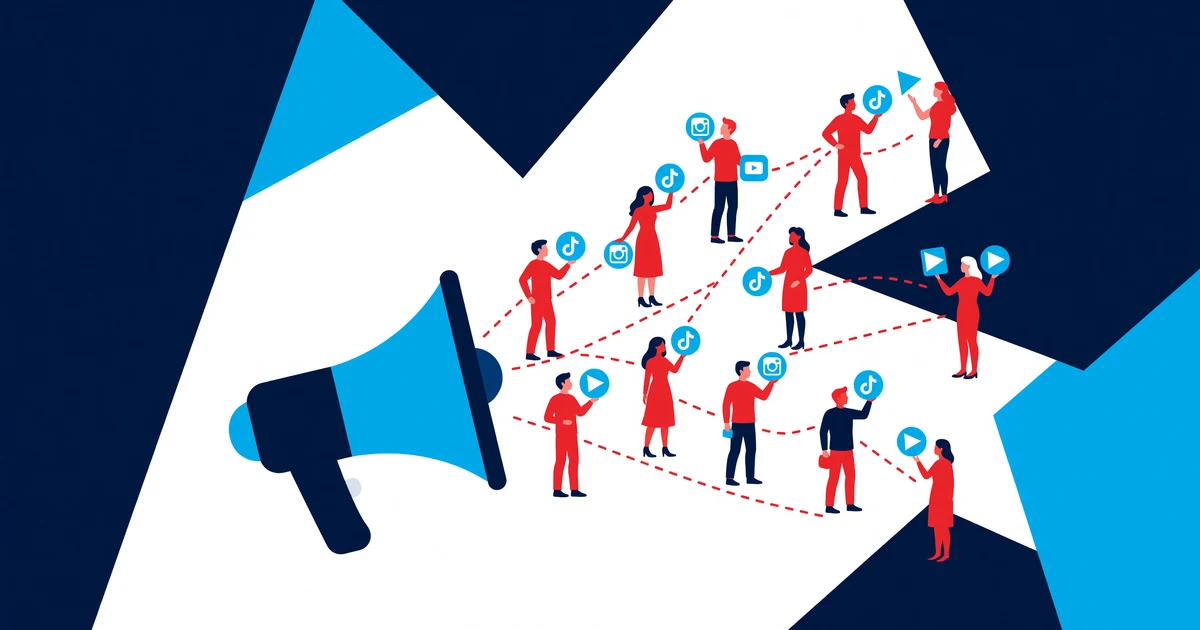
An influencer marketing agency connects brands with content creators to execute sponsored campaigns across social media platforms. These specialized companies handle the entire process from influencer discovery and contract negotiation to campaign execution and performance measurement, serving as intermediaries between brands and creators.
The influencer marketing industry has experienced significant growth, driven by the shift toward authentic, creator-led content across platforms like Instagram, TikTok, and YouTube. However, the traditional agency model is evolving as new technologies and platforms change how brands and creators collaborate.
What an Influencer Marketing Agency Does
Core Services and Responsibilities
Influencer marketing agencies provide several key services that brands often lack the expertise or resources to handle internally. Their primary responsibility is sourcing creators whose audiences align with the brand's target demographics and campaign objectives.
The vetting process involves analyzing engagement rates, audience demographics, content quality, and brand safety indicators. Agencies maintain databases of creators categorized by follower count: nano-influencers (1K-10K followers), micro-influencers (10K-100K), macro-influencers (100K-1M), and mega-influencers (1M+).
Contract negotiation includes determining compensation, content requirements, usage rights, exclusivity clauses, and deliverable timelines. Agencies also ensure Federal Trade Commission (FTC) compliance with proper disclosure requirements for sponsored content.
Campaign management involves coordinating multiple creators simultaneously, managing content approval workflows, tracking deliverables, and maintaining communication between all parties throughout the campaign lifecycle.
Strategic Campaign Development
Beyond basic influencer matching, agencies develop comprehensive campaign strategies aligned with broader marketing objectives. This includes determining optimal platform mix, content formats, posting schedules, and key performance indicators.
Content briefing ensures creators understand brand guidelines, messaging requirements, and campaign goals while maintaining their authentic voice and style. Effective agencies balance brand requirements with creator creativity to produce authentic, engaging content.
Performance tracking happens through platform analytics, custom tracking codes, and conversion measurement. Agencies measure reach, engagement, click-through rates, website traffic, and sales attribution to optimize ongoing campaigns and inform future strategy.
How Agencies Charge for Their Services
Traditional Pricing Models
Agency pricing structures vary significantly based on campaign scope, client size, and service level. Most agencies operate on commission-based models, taking a percentage of total influencer fees paid during the campaign.
Commission rates typically range from 15-30% of total influencer spend, with some agencies charging higher percentages for smaller campaigns or additional services. This model aligns agency incentives with campaign budgets but can create conflicts around cost efficiency.
Monthly retainer fees are common for ongoing partnerships, particularly with larger brands requiring consistent influencer marketing efforts. Retainer amounts vary widely based on campaign complexity and required service levels.
Some agencies charge project-based fees for specific campaigns, especially when working with defined budgets and timelines. This approach provides cost predictability but may not account for campaign complexity variations.
Emerging Pricing Approaches
Performance-based pricing models tie agency compensation to campaign results, such as engagement rates, website traffic, or sales conversions. While appealing to brands seeking accountability, these models can be challenging to implement due to attribution complexities.
Hybrid pricing combines base retainers with performance bonuses, providing agencies with predictable income while incentivizing strong results. This approach requires clear performance metrics and attribution methodologies.
Technology-enabled agencies often offer lower pricing by automating portions of the influencer discovery and management process, reducing manual labor costs while maintaining service quality.
When a Brand Should Use an Agency
Ideal Agency Scenarios
Brands benefit most from agency partnerships when lacking internal expertise in influencer marketing, creator relationship management, or campaign strategy development. Agencies provide immediate access to established creator networks and platform knowledge.
Complex campaigns involving multiple creators, platforms, and content formats often justify agency involvement due to coordination requirements and workflow management needs. Large-scale campaigns can overwhelm internal resources without proper management systems.
Regulated industries like healthcare, finance, or beauty often require specialized compliance knowledge that agencies provide through experience with similar brands and regulatory requirements.
Brands entering new markets or demographics benefit from agency expertise in creator selection and cultural considerations that internal teams might miss.
When to Consider Alternatives
Companies with established creator relationships might not need full agency services, instead requiring only specific support for contract negotiation or performance measurement.
Brands with significant internal marketing resources may prefer direct creator partnerships, using agencies only for discovery services or specialized campaign types.
Small businesses with limited budgets often find agency fees prohibitive relative to campaign spending. Alternative approaches like influencer marketing platforms or direct outreach may provide better cost efficiency.
Agency vs In-House vs Software Solutions
Building Internal Capabilities
In-house influencer marketing teams provide greater control over creator relationships and campaign strategy but require significant investment in hiring, training, and technology infrastructure.
Internal teams excel at long-term creator partnerships and brand consistency but may lack the breadth of creator networks and platform expertise that agencies offer.
Successful in-house programs typically combine dedicated staff with technology platforms for creator discovery, relationship management, and performance tracking.
Technology Platform Solutions
Influencer marketing software platforms automate many traditional agency functions, including creator discovery, outreach, contract management, and performance tracking at lower costs than full-service agencies.
These platforms work well for brands with internal marketing expertise who need tools rather than strategy development. They offer greater transparency and control compared to traditional agency black-box approaches.
However, software solutions require internal expertise to execute effectively and may lack the strategic guidance and relationship management that agencies provide.
Platform solutions are particularly effective for campaigns focused on micro-influencers and performance-driven objectives where scale and efficiency matter more than relationship depth.
Hybrid Approaches
Many successful brands combine elements of agency services, internal capabilities, and technology platforms based on specific campaign needs and resource availability.
For example, brands might use agencies for high-profile celebrity partnerships while managing micro-influencer campaigns through technology platforms with internal oversight.
This approach allows companies to optimize costs while maintaining service quality for different campaign types and objectives.
The Evolution of Influencer Marketing Services
Technology Integration
Modern influencer marketing increasingly relies on technology for creator discovery, audience analysis, and performance measurement. Agencies investing in these capabilities offer better service efficiency and campaign insights.
Artificial intelligence and machine learning improve creator matching by analyzing audience overlap, engagement patterns, and content performance predictions beyond basic demographic matching.
Automation handles routine tasks like initial outreach, contract generation, and performance reporting, allowing agencies to focus on strategy development and relationship management.
Platform Diversification
Successful agencies adapt to emerging platforms and changing creator economy dynamics rather than focusing exclusively on established platforms like Instagram and YouTube.
TikTok's rapid growth requires specialized expertise in short-form video content, trend identification, and platform-specific optimization strategies that differ significantly from other platforms.
Cross-platform campaign coordination becomes increasingly important as creators and audiences fragment across multiple platforms with different content formats and engagement patterns.
Measurement and Attribution
Advanced attribution methods help brands understand influencer marketing's impact on overall marketing objectives rather than isolated campaign metrics.
Integration with broader marketing technology stacks enables better understanding of customer journey touchpoints and influencer content's role in conversion paths.
Real-time optimization capabilities allow campaign adjustments based on ongoing performance data rather than post-campaign analysis.
The influencer marketing agency landscape continues evolving as technology, platforms, and creator economy dynamics change. Brands should evaluate agency partnerships based on specific needs, available alternatives, and desired level of control over influencer relationships.
Successful influencer marketing requires understanding these options and selecting approaches that align with business objectives, resource availability, and campaign complexity rather than defaulting to traditional agency models.
Frequently Asked Questions
What does an influencer marketing agency actually do for a brand?
An influencer marketing agency manages the full sponsored campaign process between brands and creators. That usually includes finding and vetting influencers, negotiating contracts, coordinating content and approvals, and measuring results across platforms.
How do influencer marketing agencies charge for their services?
Most influencer marketing agencies charge either a commission on influencer spend, a monthly retainer, or a project-based fee. Some also use performance-based or hybrid pricing models, especially when brands want clearer alignment between fees and campaign outcomes.
When should a brand hire an influencer marketing agency instead of doing it in-house?
A brand should hire an agency when it lacks internal influencer marketing expertise or needs help managing complex campaigns across multiple creators and platforms. Agencies are also especially useful in regulated industries or when entering new markets where compliance and creator selection are more specialized.
Is an influencer marketing agency better than software or an in-house team?
An agency is better when a brand needs strategy, creator relationships, and hands-on campaign management rather than just tools. In-house teams offer more control, while software platforms are often more cost-efficient for brands that already have the expertise to run campaigns themselves.
Why are influencer marketing agencies using more technology now?
Influencer marketing agencies are using more technology to improve creator discovery, audience analysis, and campaign measurement. Automation and AI help reduce manual work and improve matching, which lets agencies focus more on strategy and relationship management.