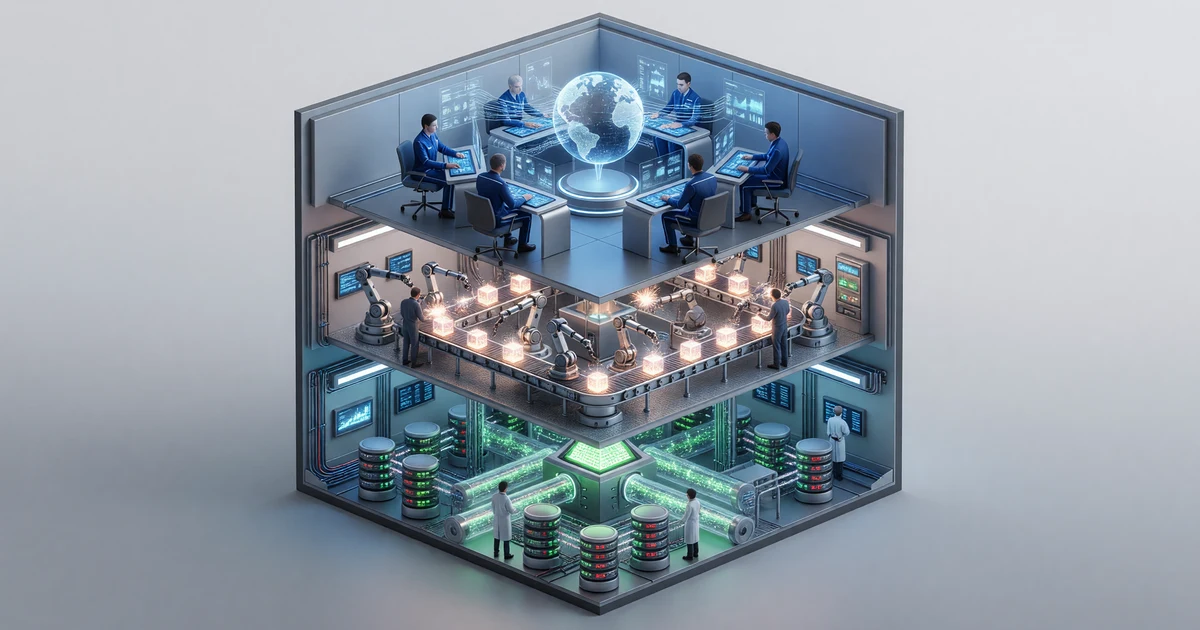
BattleBridge isn't a traditional digital marketing agency that runs campaigns—we build autonomous AI systems that run themselves.
In one senior living directory project spanning six months, our systems helped generate 977 city pages across all 50 states plus Washington, DC, managing 8,442 CRM contacts and building platforms with 4,757 community listings. While other agencies manage your marketing, we build marketing machines that operate continuously with minimal manual intervention.
Most digital marketing agencies follow the same playbook: assign account managers, run campaigns, send monthly reports, repeat. That model assumes marketing requires constant human oversight and manual execution. We've challenged that assumption by deploying multi-agent systems that handle complex marketing workflows with reduced human dependency, delivering measurable results that scale efficiently.
Common Limitations of Traditional Digital Marketing Agencies
Campaign-Dependent Business Models
Many digital marketing agencies live campaign to campaign. They launch PPC campaigns, manage social media accounts, create content calendars, and optimize based on monthly reviews. This approach often creates three fundamental bottlenecks:
Human resource constraints: Most tasks require a person. Content needs writers, PPC needs managers, SEO needs specialists. When demand increases, agencies typically hire more people. When budgets tighten, they cut staff. This business model can struggle to scale efficiently because human capacity has fixed limits.
Time limitations: Marketing teams typically work standard business hours. Many campaigns receive attention primarily during weekdays. Optimization often happens during scheduled reviews. Competitive opportunities can get missed during off-hours—our AI agents generated the USR directory's 977 city pages while working continuously without breaks.
Knowledge silos: Different specialists often handle different channels without seamless integration. PPC teams may have limited direct communication with SEO teams. Content creators might work separately from data analysts. Critical insights can get lost between handoffs, reducing overall campaign effectiveness.
The Agency Overhead Problem
A typical digital marketing agency carries substantial overhead costs:
- Account managers coordinating between teams
- Project managers tracking campaign progress
- Multiple specialists for different marketing channels
- Administrative staff handling billing and reporting
- Office space, benefits, and operational expenses
This overhead gets passed to clients through retainer fees, management charges, and project markups. You're funding an entire business infrastructure, not just marketing results.
Limited Scaling Capacity
When traditional agencies take on more clients, they face predictable scaling challenges:
- Hiring qualified specialists typically takes several months
- Training new team members can reduce overall productivity
- Quality control becomes increasingly difficult with larger teams
- Individual client attention may get diluted across growing account loads
The result is often either declining service quality or increased costs passed to clients—neither outcome serves business growth effectively.
How BattleBridge Operates as an AI-First Marketing Partner
Multi-Agent Architecture That Delivers Results
Instead of traditional human teams, we've built autonomous systems with measurable capabilities. Our infrastructure includes specialized agents operating across multiple servers, each focused on specific marketing functions:
- Content generation and optimization agents
- SEO analysis and implementation agents
- Data processing and CRM management agents
- Technical infrastructure maintenance agents
- Performance monitoring and reporting agents
These agents execute workflows independently through registered skills including:
- Keyword research and competitive analysis
- Page generation and optimization
- Link building and outreach automation
- Data collection and processing workflows
- Real-time performance monitoring and reporting
Coordination with human oversight: Agents share data and insights through APIs, with workflows triggered based on performance thresholds. Systems adapt strategies based on real-time results, with human review focused on strategic direction and exception handling.
Production Systems With Concrete Results
Our approach delivers measurable outcomes. We've built and currently operate:
USR Senior Living Directory (developed over 6 months, 2023) - Our AI content agents created a comprehensive directory featuring:
- 977 city pages across all 50 states plus Washington, DC
- 4,757 community listings with detailed information
- Programmatic SEO optimization for each location
- Automated content updates and ongoing maintenance
Custom CRM System (internal project, 2023) - We built a CRM managing 8,442 contacts using AI agents instead of purchasing traditional software:
- Reduced monthly SaaS fees after initial development
- Custom workflows designed for our specific needs
- Automated data processing and enrichment
- Integrated reporting and analytics dashboards
EBL Coaching Platform (client project, 2024) - A complete business coaching platform featuring:
- Automated content delivery systems
- Student progress tracking across multiple programs
- Performance analytics and detailed reporting
- Integrated marketing automation workflows
Operational Differences That Matter
Traditional agencies organize around human capabilities and limitations. We organize around outcome-focused systems designed for specific business objectives.
Specialized agent roles: Instead of generalist account managers juggling multiple responsibilities, each agent has specific capabilities optimized for particular marketing functions with measurable performance metrics.
Automated coordination: Agents communicate through APIs and shared data stores, reducing the communication overhead that can slow human teams and cause project delays.
Continuous operation: Our systems run 24/7 without breaks, sick days, or vacation time. Marketing optimization happens constantly—not just during scheduled business hours or monthly reviews.
Efficient scaling: Adding capacity means deploying additional agents, not hiring and training new staff. We can scale operations without proportional cost increases or quality degradation.
Measurable Results From AI-First Marketing
Programmatic SEO at Scale
Traditional agencies often create content page by page through manual processes. In our USR project, SEO agents generated 977 city pages across all 50 states plus Washington, DC, in a fraction of the time human teams typically require, with each page optimized for specific local keywords and user intent.
The process operated with minimal manual intervention:
- Agents identified target locations and relevant keywords
- Generated unique, optimized content for each city
- Created logical internal linking structures
- Implemented schema markup for enhanced search visibility
- Monitored indexing status and ranking performance
This demonstrates how AI marketing systems provide superior efficiency compared to traditional SEO tools that require human interpretation and manual implementation.
Continuous Performance Optimization
Unlike agencies that optimize monthly or quarterly, our agents optimize continuously:
Real-time performance monitoring: Agents track rankings, traffic patterns, and conversion metrics constantly, identifying optimization opportunities as they emerge rather than waiting for scheduled reporting periods.
Automated testing implementation: Instead of proposing A/B tests in monthly meetings, our systems implement and analyze tests automatically, making data-driven adjustments with reduced human delays.
Adaptive strategy execution: When algorithms change or competitive landscapes shift, our agents can adapt strategies quickly without waiting for human meetings, approvals, or strategy sessions.
Cost Structure and Time Efficiency
Building marketing systems requires upfront investment but can eliminate much ongoing operational overhead. Consider the long-term economics:
Traditional agency model: Monthly retainers for services that scale linearly with scope, creating ongoing expenses without asset ownership
AI-first model: Development costs that create lasting digital assets with reduced ongoing expenses and efficient scaling potential
Our USR directory required substantial initial development but now operates with minimal maintenance costs while continuously generating new content, optimizing existing pages, and expanding market coverage.
The Evolution of Digital Marketing Agencies
From Service Delivery to System Development
The marketing agency model is evolving from service provision to system creation. Instead of doing marketing for clients on an ongoing basis, innovative companies build marketing systems that operate with greater autonomy and deliver lasting value.
This evolution requires different core capabilities:
- AI system design and deployment expertise
- Multi-agent coordination architecture development
- Custom software development and maintenance
- Data engineering and automation implementation
- Continuous system optimization and performance monitoring
Competitive Advantages of Autonomous Marketing
Companies that embrace AI-first marketing approaches can gain measurable advantages over traditional agencies:
Execution speed: AI agents execute complex tasks faster than human teams. What takes weeks for traditional agencies to plan and implement can happen in hours with properly configured autonomous systems.
Performance consistency: Agents don't have bad days, don't forget critical tasks, and don't apply strategies inconsistently. Every action follows optimized protocols based on performance data.
Scaling efficiency: Adding new markets, products, or campaigns doesn't require hiring additional specialists. Existing agents can handle increased scope with minimal resource additions.
Market adaptability: When market conditions change or new opportunities emerge, AI systems can adapt faster than human teams typically reorganize, retrain, and implement new strategies.
Working With BattleBridge: Building Marketing Assets
We don't operate like traditional marketing agencies because we don't provide traditional services. Instead, we build autonomous marketing systems that become digital assets your business owns and operates with minimal ongoing dependency.
Our Development Process
Discovery and Analysis: We analyze your marketing requirements and identify high-impact opportunities for autonomous systems that align with your business objectives.
System Architecture: We design multi-agent systems specific to your industry, target market, and growth objectives, ensuring optimal performance and scalability.
Development and Integration: We build and deploy AI agents with the specialized skills needed for your marketing objectives, integrating with existing systems and data sources.
Configuration and Training: We configure agents with your brand voice, target audiences, competitive landscape, and optimization goals for consistent performance.
Deployment and Monitoring: We launch systems with comprehensive monitoring to ensure proper operation and immediate identification of optimization opportunities.
Ongoing Optimization: Agents continuously improve performance based on real-time results and changing market conditions, with strategic human oversight for major decisions.
Strategic Implications for Growing Businesses
If you're evaluating marketing partners, consider the fundamental differences in approach and long-term value:
Traditional agencies provide ongoing services with predictable monthly costs but create dependency relationships and human-imposed scaling limitations.
AI-first companies build marketing assets with higher upfront investments but can deliver superior long-term ROI and efficient scaling potential with reduced ongoing dependencies.
The optimal choice depends on your growth timeline and business objectives. For immediate campaign management needs, traditional agencies provide familiar service models. For building sustainable competitive advantages, AI-first approaches can deliver better long-term value.
Ready to Move Beyond Traditional Agency Models?
If you're ready to explore how autonomous AI systems can replace traditional agency dependencies with owned marketing assets, discover our approach to building multi-agent marketing systems.
For businesses seeking specific insights into AI-first marketing strategies, explore our analysis of emerging opportunities in generative engine optimization for AI search platforms.
Companies ready to invest in the future of autonomous marketing can learn about investment opportunities as we scale our AI-first approach to serve more businesses seeking sustainable competitive advantages.
Contact BattleBridge today to discuss building autonomous marketing systems that deliver measurable results with greater efficiency than traditional agency models.