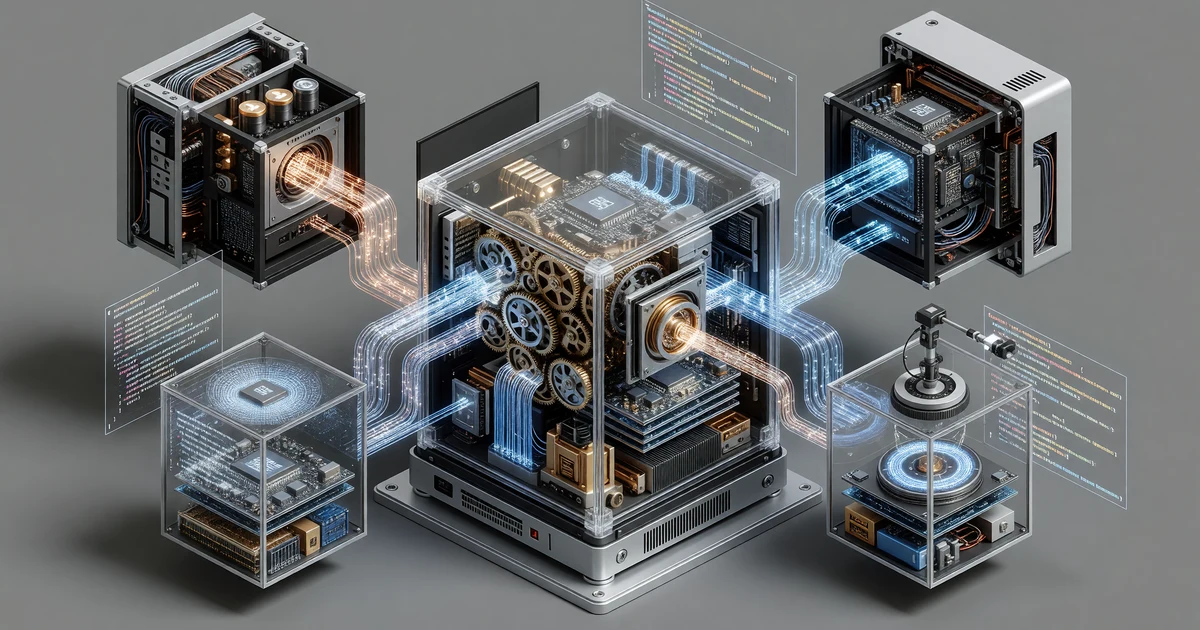
AI coding assistants can help automate specific programming tasks within larger software systems. At BattleBridge, we use what we call "Claude code sub agents"—our term for specialized AI modules that assist with autonomous coding workflows. Here's what they are, how they work, and when they might be useful.
What Are Claude Code Sub Agents?
Claude code sub agents are task-specific AI modules that we've developed to handle discrete programming functions within multi-agent systems. Unlike standard AI coding tools that respond to individual prompts, these modules can execute predefined workflows with minimal human oversight.
Important note: "Claude code sub agents" is BattleBridge's internal terminology for our implementation approach, not an official Anthropic product feature.
These modules typically assist with:
- Generating test files
- Creating database queries
- Building page templates
- Running code linters
- Opening pull requests
How They Work in Practice
Task Automation
In our experience, code sub agents work best when given specific, bounded objectives. For example, our SEO module generates landing page templates based on predefined data patterns and style guides.
The process typically involves:
- Analyzing input data or triggers
- Applying predetermined rules and templates
- Generating code following established patterns
- Running basic validation checks
Coordination Between Modules
We've found success connecting multiple specialized modules rather than relying on a single general-purpose agent. Our content module identifies requirements, while our technical module handles implementation details.
This modular approach allows for:
- Clearer error tracking
- Easier debugging and updates
- More predictable outputs
- Better resource allocation
Real Examples from Our Implementation
Programmatic Page Generation
We've used AI-assisted workflows to help generate pages for our senior living directory project. Our system has created content for communities across multiple states, though this requires ongoing human review and quality control.
Methodology: [Data sourced from public records as of Q4 2024, with manual verification for accuracy]
CRM Development Support
Rather than purchasing existing CRM software, we built custom solutions with AI assistance. Code sub agents helped with database schema design and basic CRUD operations, while human developers handled complex business logic and security implementation.
Content Management Systems
Our AI modules assist with creating dynamic content templates. They can generate basic page structures based on content patterns, though final review and approval remain essential human tasks.
Benefits and Limitations
What Works Well
- Repetitive coding tasks: Generating similar components or pages
- Template creation: Building consistent structures from patterns
- Basic testing: Creating unit tests for straightforward functions
- Documentation: Generating code comments and basic documentation
Important Limitations
- Security constraints: All AI-generated code requires security review
- Complex logic: Business-critical decisions still need human oversight
- Error handling: Automated systems may not anticipate edge cases
- Approval gates: Production deployment should always include human verification
- Scope boundaries: Works best for well-defined, predictable tasks
Should You Use Them?
AI coding assistants work best when you have:
- Repetitive coding patterns that follow established templates
- Clear specifications for desired outputs
- Robust review processes for generated code
- Technical infrastructure to support automated workflows
- Realistic expectations about current AI capabilities
Getting Started
Consider beginning with low-risk applications like:
- Generating boilerplate code
- Creating test files
- Building documentation templates
- Automating simple refactoring tasks
Start small, measure results carefully, and expand gradually based on what works for your specific use case.
Implementation Considerations
Technical Requirements
Successful implementation typically requires:
- Dedicated development environments for testing
- Version control integration
- Automated testing pipelines
- Clear rollback procedures
Team Integration
Plan for how AI-assisted workflows will integrate with existing development processes. Consider training needs, code review procedures, and quality assurance protocols.
Quality Assurance
Establish clear guidelines for:
- Code review requirements
- Testing standards
- Security validation
- Performance benchmarks
Looking Forward
AI coding assistance continues evolving rapidly. What works today may be outdated in months. Focus on building flexible systems that can adapt to new capabilities while maintaining quality and security standards.
The key is treating AI as a powerful tool that enhances human capabilities rather than replacing human judgment, especially for business-critical applications.
Ready to explore AI-assisted development for your projects? Contact BattleBridge to discuss how structured AI workflows might fit your specific technical requirements and business objectives.
We focus on practical implementations that deliver measurable results while maintaining the quality and reliability your business demands.