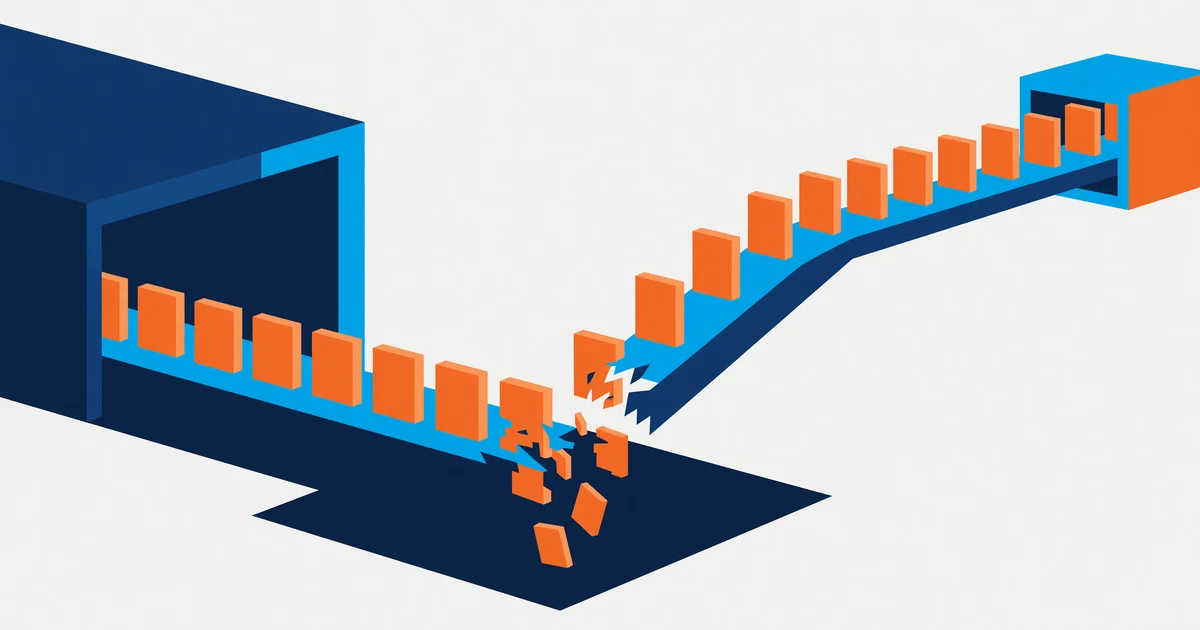
AI closes the testing loop by watching live performance, promoting winners, killing losers, and creating the next test without waiting for a human to notice the result. Auto-promote and auto-kill is the operating model where ad tests do not end in a spreadsheet; they end in action.
That is the difference between a campaign manager using AI tools and an agentic marketing system. A tool gives you a recommendation. An agent takes the next approved step.
At BattleBridge, this is the line we care about. We are not building a traditional agency that runs campaigns and sends reports. We are building marketing machines: autonomous systems that observe, decide, act, and improve across production environments.
Our current operating stack includes 10 deployed AI agents across 3 servers, 46 registered skills, and real systems with real business data: USR, a senior living directory covering 977 cities, 51 states, and 4,757 communities; a CRM with 8,442 contacts; and the EBL coaching platform. That matters because theory breaks quickly when agents touch live accounts, live content, live contacts, and live revenue paths.
Auto-promote and auto-kill is one of the clearest examples of why agentic marketing changes the job.
The Old Testing Loop Is Too Slow
Most ad testing systems fail for a boring reason: the loop is not closed.
A human launches variants on Monday. The platform collects data. Somebody checks performance later. A winner gets noticed, maybe. A loser keeps spending longer than it should. A replacement test waits until someone has time to brief, write, approve, build, and launch it.
That is not a testing system. That is a queue with invoices attached.
The standard loop looks like this:
- Launch ads.
- Wait for enough data.
- Pull a report.
- Interpret performance.
- Pause losers.
- Increase budget on winners.
- Request new creative.
- Launch the next round.
The weak point is not intelligence. Good marketers can read a test. The weak point is latency.
Every delay has a cost. If a losing ad spends $300 after it should have been killed, that is not a measurement expense. That is waste. If a winning ad waits four days before budget moves behind it, that is not caution. That is missed volume.
This is why the goal is not just to auto promote ad winners. The larger goal is to remove dead space between evidence and action.
Why Human Review Becomes the Bottleneck
Human review is valuable when judgment is required. It is expensive when the decision is repetitive.
A marketer should decide the offer, positioning, risk tolerance, audience strategy, and business objective. A human should define what counts as a meaningful conversion and what level of evidence is required before scaling.
But once those rules are defined, most test decisions are operational:
- Has the ad spent enough to judge?
- Is the conversion rate meaningfully above the control?
- Is cost per lead below the allowed ceiling?
- Is the result stable across enough impressions, clicks, or conversions?
- Has the loser failed by enough margin to stop spending?
- Is the winner eligible for more budget?
- Is there an approved replacement ready?
Those are machine decisions.
The problem with many ad accounts is that humans keep doing machine decisions, and machines are only used for suggestions. That creates a strange half-automated workflow: AI drafts copy, platforms optimize delivery, dashboards show performance, but the actual testing loop still waits for a person.
An agentic system closes that gap.
For the broader operating model, see What Is Agentic Marketing?. The short version: agents do not just generate assets. They execute workflows against goals.
What Auto-Promote Actually Means
Auto-promote means the system moves budget, traffic, placement, or campaign priority toward a winner after it clears defined rules.
It does not mean blindly doubling spend because one ad had a good morning. It means the system has a promotion policy.
That policy can include:
- Minimum spend before judging.
- Minimum impression or click threshold.
- Minimum conversion count.
- Maximum cost per acquisition.
- Minimum lift over control.
- Confidence or stability requirement.
- Budget increase limits.
- Brand and compliance checks.
- Human escalation thresholds.
A simple promotion rule might say: if an ad has at least 20 conversions, beats the control by 25% on cost per qualified lead, and stays under the account's target CPA for 72 hours, increase budget allocation by 15%.
A more advanced rule might treat promotion differently by funnel stage. A top-of-funnel creative test may judge on qualified click rate and downstream engagement. A lead generation campaign may judge on cost per qualified lead. A sales campaign may judge on pipeline value or revenue, not form fills.
The core idea is that winners should not sit idle.
If the evidence is strong enough, the system acts.
Promotion Is Not Always Budget
Marketers often think promotion only means more spend. That is one version, but it is not the only one.
An AI agent can promote a winner by:
- Moving the ad into a broader audience.
- Adding it to a higher-volume campaign.
- Creating landing page variants around its message.
- Turning the hook into email or retargeting copy.
- Feeding the winning angle into SEO content.
- Using it as the control for the next creative round.
This is where agentic systems become more powerful than platform automation. Google, Meta, and other ad platforms can optimize inside their own walls. A multi-agent marketing system can move learning across channels.
For example, if a senior living ad angle consistently wins around "compare communities by care level," that insight should not stay trapped in an ad set. It can inform USR city pages, CRM nurture messages, search content, and retargeting sequences.
That is how a marketing machine compounds learning.
We wrote more about this system-level architecture in Architecture of an Agentic Marketing System.
What Auto-Kill Actually Means
Auto-kill means the system stops weak ads before they keep draining budget.
This is just as important as promotion. In many accounts, the biggest gains do not come from finding one perfect winner. They come from enforcing discipline on the long tail of underperformers.
A losing test should not need a meeting.
If an ad has enough data and fails the rules, the system should pause it, cap it, archive it, or move it into a review state. The action depends on the severity of failure and the risk profile of the account.
A weak loser might be capped. A clear loser might be paused. A compliance-risk loser might be removed immediately and escalated to a human.
The Kill Rule Matters
Bad automation kills too early. Slow automation kills too late.
The kill rule needs to respect sample size, conversion lag, and funnel economics. If the system judges too quickly, it will eliminate ads before the platform has enough signal. If it waits too long, it will waste money protecting creative that already lost.
A practical auto-kill policy may include:
- Do not judge before minimum spend.
- Do not judge before minimum impressions.
- Account for conversion lag.
- Compare against the correct control.
- Separate learning-phase instability from real failure.
- Apply stricter rules when budget is constrained.
- Escalate unusual patterns instead of acting blindly.
This is why the system needs memory. A good agent does not only look at today's dashboard. It knows the account's historical benchmarks, previous winners, rejected angles, seasonal behavior, and offer economics.
At BattleBridge, that memory layer is not theoretical. Our production systems already operate over large structured datasets: 977 USR city markets, 4,757 senior living community records, and 8,442 CRM contacts. Different data, same discipline: agents need context before action.
Killing Losers Creates the Next Test Slot
Auto-kill is not just a cost-saving function. It is also a production trigger.
When a loser is paused, the system should create a vacancy in the test queue. That vacancy should trigger the next action:
- Read why the ad lost.
- Compare it against winners.
- Identify the likely weak variable.
- Generate a replacement variant.
- Check the variant against constraints.
- Launch it into the available test slot.
This is where the testing loop closes.
A human team often kills an ad and then waits for new creative. An agentic system kills an ad and immediately starts replacing it.
That replacement does not have to be random. If the losing ad had a strong click-through rate but weak conversion rate, the message may be attracting the wrong intent. If it had a weak click-through rate but strong conversion rate, the offer may work, but the hook needs sharper packaging. If it performed well in one audience and failed in another, the issue may be targeting-message fit.
The agent's job is to turn the failure into the next experiment.
The Agentic Testing Loop
A closed-loop AI ad system has five layers: observe, judge, act, generate, and learn.
Each layer has a job.
Observe
The system monitors performance data from ad platforms, analytics, CRM, and downstream conversion sources.
This matters because ad platforms often optimize around platform-native events, while the business may care about qualified leads, booked calls, pipeline value, or revenue. A form fill is not always a good lead. A cheap lead is not always a profitable lead.
If you only use ad platform data, you will optimize toward whatever the platform can see. If you connect CRM and business outcomes, you can optimize toward what the company actually wants.
This is why our CRM work matters. Building and operating around 8,442 contacts gives agents a richer view than surface-level campaign metrics. The system can learn from source, status, segment, fit, and downstream value.
Judge
The agent compares performance against the promotion and kill rules.
This is where most teams need more rigor. "This ad feels better" is not a rule. "This ad has 31 qualified conversions at 18% lower cost than the current control over a 7-day window" is a rule.
The judging layer should separate:
- Creative performance.
- Audience performance.
- Landing page performance.
- Offer performance.
- Lead quality.
- Sales follow-up quality.
- Seasonal or timing effects.
Without that separation, teams make bad decisions. They kill good creative because the landing page was weak. They promote cheap leads that never close. They blame audiences when the offer is unclear.
AI does not magically fix bad measurement. It makes measurement discipline more important because action happens faster.
Act
The system applies the decision.
This can include pausing losers, increasing budget, shifting allocation, launching replacements, creating internal notes, notifying humans, or escalating anomalies.
The phrase auto promote ad winners should never mean "remove humans from strategy." It means the operational decision happens when the evidence is ready, not when a calendar reminder fires.
Humans set the rules. Agents execute them.
Generate
The system creates the next variant based on what it learned.
This is the part traditional platforms do poorly because they do not know your business deeply enough. A platform can mix assets, but it usually cannot understand your positioning, sales objections, CRM segments, content strategy, and offer history.
An agentic system can.
For BattleBridge, the same principle used in programmatic SEO applies to paid testing. Our SEO agent generated coverage for 977 city pages across 51 states for USR. That required structure, constraints, data mapping, and repeatable production. Ad testing needs the same operating logic: not random generation, but controlled variation.
You can see the SEO version in Programmatic SEO at Scale.
Learn
The system stores outcomes so future tests improve.
This is the difference between automation and compounding.
A weak system launches endless variants with no memory. A strong system remembers that a certain pain point wins in one market, that a certain claim gets rejected, that a certain call-to-action attracts poor-fit leads, and that a certain audience responds better to proof than urgency.
Over time, the test library becomes an asset.
The account stops being a pile of ads and becomes a learning system.
Why This Changes the Agency Model
Traditional agencies sell labor. They run campaigns, write reports, attend meetings, and make changes on a human schedule.
That model made sense when the tools required people to operate every step. It makes less sense when agents can monitor, decide, generate, and deploy inside a controlled system.
BattleBridge is built around a different premise: the valuable thing is not the campaign. The valuable thing is the machine that keeps improving the campaign.
That is why our work spans ads, SEO, CRM, and operating systems. USR is not just an SEO project. It is a structured acquisition asset. The CRM is not just a contact database. It is a memory layer for marketing and sales. Ads Arsenal is not just campaign management. It is the beginning of an autonomous paid media operating system.
If you want the paid media side, start with Ads Arsenal — AI-Agent Ads Management.
The Human Role Gets More Strategic
When agents handle the loop, humans do not disappear. They move up the stack.
The human role becomes:
- Define the business objective.
- Set acceptable risk.
- Approve positioning boundaries.
- Decide what claims can and cannot be made.
- Define qualified conversion events.
- Set budget ceilings.
- Review escalations.
- Interpret strategic patterns.
- Decide when the machine needs a new offer, market, or channel.
That is a better use of experienced marketers.
I founded BattleBridge after 18+ years in marketing, and the pattern is obvious: most high-leverage thinking gets buried under operational drag. The best people spend too much time checking dashboards, moving budgets, writing minor variants, and explaining what happened last week.
Agentic systems reduce that drag.
Not by making marketing easy. By making repetitive decisions executable.
The Practical Standard: Guardrails First, Autonomy Second
Autonomy without guardrails is not a system. It is a liability.
Before an AI agent can promote or kill ads, it needs rules for business logic, budget control, brand safety, compliance, and escalation.
A serious implementation should define:
- What counts as a conversion.
- What counts as a qualified conversion.
- What time window is used for judgment.
- What sample size is required.
- How much budget can move automatically.
- Which campaigns are eligible for automation.
- Which offers require human approval.
- Which claims are prohibited.
- Which anomalies trigger alerts.
- What logs are stored for review.
The best version is not "let AI do everything." The best version is constrained autonomy.
Give the agent enough authority to remove latency. Give humans enough control to protect the business.
That is the operating balance.
When built correctly, auto-promote and auto-kill turns advertising from episodic campaign management into continuous optimization. The system does not wait for a meeting. It does not forget to check the test. It does not leave losers spending because the account manager is busy.
It watches. It judges. It acts. It learns.
That is how you build a marketing machine.
FAQ
Can AI promote winning ads automatically?
Yes. With clear guardrails, AI can auto promote ad winners by increasing budget, expanding audience allocation, or moving proven creative into higher-volume campaigns after performance thresholds are met.
The important part is that the thresholds are defined before the test runs. AI should act on evidence, not vibes.
What happens to losing ads in an AI test?
Losing ads are paused, capped, or removed from rotation once they fail the defined test criteria. The system can also tag the reason for failure so the next variant is more informed.
A losing ad is not just discarded. It becomes data for the next test.
How does AI replace a tested-out ad?
The agent reads the winning and losing patterns, generates a new variant, checks it against brand and offer rules, and launches it into the next test slot. That is how auto promote ad winners systems keep the queue full instead of waiting for a weekly creative meeting.
The replacement should test a specific variable: hook, proof, offer, audience fit, objection, format, or call-to-action.
Does the test ever stop running?
No. Individual tests end, but the system keeps running because markets, costs, competitors, and audience behavior keep changing.
A stopped testing loop eventually becomes a stale account.
Who decides the winner, AI or human?
The AI decides within rules set by humans. Humans define the business goal, risk limits, brand constraints, and escalation rules; the AI handles the repetitive testing decisions.
That is the point of auto promote ad winners workflows: human strategy, machine-speed execution.
Build the Machine
If your ad account still depends on someone remembering to check the test, the loop is open.
BattleBridge builds AI-first marketing systems that close it. We deploy agents that monitor performance, enforce rules, promote winners, kill losers, generate replacements, and carry learning across channels.
Start with BattleBridge Home or go directly to Ads Arsenal — AI-Agent Ads Management if you want paid media built around autonomous testing instead of manual campaign maintenance.
Get Your Free Auto Promote Ad Winners Audit
BattleBridge runs autonomous AI agents that handle this end to end — research, content, distribution, and reporting — for a flat monthly rate instead of an agency retainer. We'll audit your current setup, show you exactly where agents outperform your existing stack, and hand you the findings whether you hire us or not.
Get your free audit — 30 minutes, no pitch deck, real numbers.