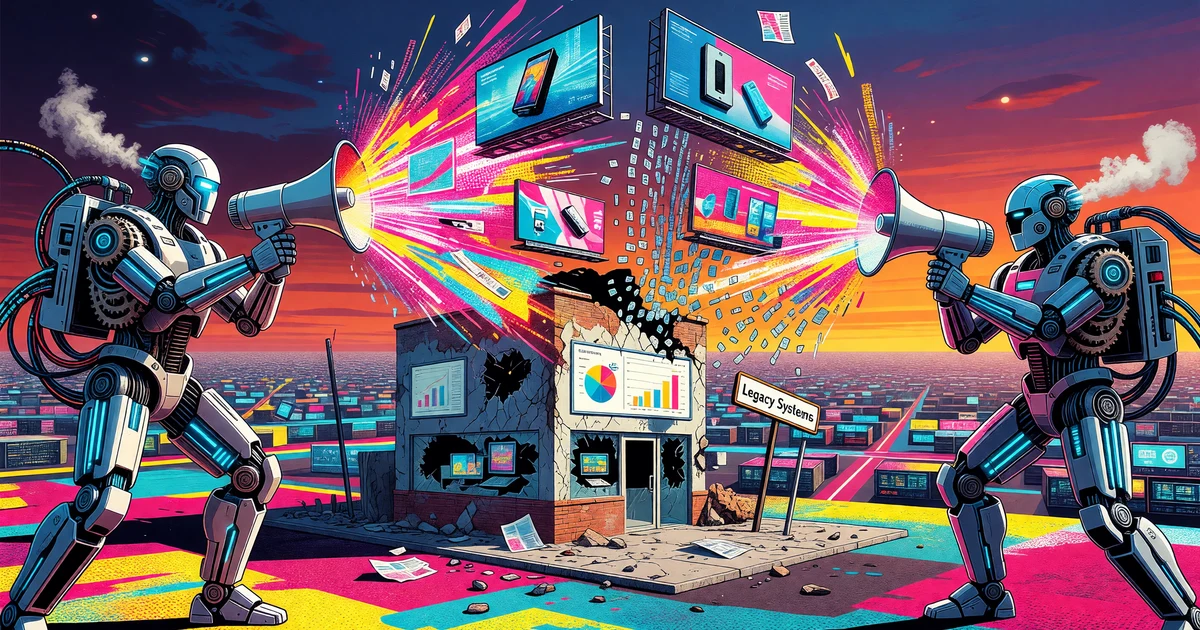
BattleBridge uses paid advertising platforms as execution layers inside an autonomous marketing system, not as standalone dashboards where humans manually tweak campaigns. The difference is that our ads are connected to agents, CRM data, landing pages, content systems, and conversion feedback loops from day one.
Most agencies sell campaign management. BattleBridge builds marketing machines. We have 10 deployed AI agents running across 3 servers, 46 registered skills, and production systems that already manage real business assets: a senior living directory covering 977 cities, 51 states, and 4,757 communities; a CRM with 8,442 contacts; and the EBL coaching platform. Paid media is one part of that machine, not the entire machine.
That changes how we think about Google Ads, Meta, Instagram, LinkedIn, display, retargeting, and paid web advertising. The question is not “Which platform should we spend money on?” The better question is: “Which platform can feed the machine with the cleanest signal, fastest learning, and most profitable demand?”
The Problem With Traditional Paid Ad Management
Most paid media work is still organized around human campaign operators.
A strategist builds the campaign plan. A media buyer sets up the account. A copywriter writes ads. A designer makes creatives. A landing page person ships pages. An analyst checks reports later. A client meeting turns the lagging data into action items. The next cycle repeats.
That workflow can function, but it is slow. Worse, the actual learning gets trapped in slide decks, Slack threads, and account notes instead of becoming part of the operating system.
Platforms Are Not Strategy
Paid ad platforms are powerful, but they do not solve the hard parts by themselves.
Meta can distribute a facebook paid advertisement. Google can capture search demand. LinkedIn can target job titles and companies. Instagram can test visual angles quickly. Display can retarget visitors across the web.
None of those platforms automatically answer the core commercial questions:
What offer is worth scaling?
Which audience segment is actually converting?
Which landing page message turns attention into action?
Which CRM contacts should be excluded, reactivated, or moved into a different sequence?
Which search terms, city pages, or content assets should be built next?
A traditional agency often treats these as separate deliverables. BattleBridge treats them as connected system states.
Manual Optimization Is Too Slow
Manual optimization depends on humans noticing patterns and deciding what to do next. That creates delay at every step.
A campaign gets data on Monday. Someone checks it Wednesday. A report is built Friday. A recommendation is discussed next week. A change is made after approval. By then, the market has already moved.
That delay matters because paid traffic is rented attention. Every wasted click compounds. Every weak landing page dilutes the budget. Every disconnected CRM record hides what the campaign actually produced.
Our approach is different because the advertising account is not the center of the system. The system is the center.
For a deeper view of that operating model, read Architecture of an Agentic Marketing System.
How BattleBridge Uses Paid Advertising Platforms
BattleBridge connects paid media to autonomous agents that can research, generate, deploy, monitor, and improve the assets around the campaign.
That means the campaign is not just “ads running on Meta” or “linkedin paid ads targeting founders.” It is a coordinated system of data inputs and production outputs.
The Agent Layer
Our current infrastructure includes 10 deployed AI agents across 3 servers and 46 registered skills. Those skills are not theoretical. They are used in real workflows for SEO, CRM enrichment, content generation, landing page production, directory operations, and marketing analysis.
That matters for paid media because ads are only as good as the system around them.
An ad agent can evaluate campaign structure. A content agent can produce new page variants. An SEO agent can identify demand patterns from organic search. A CRM agent can inspect contact records and reveal which segments are worth excluding or prioritizing. A reporting agent can summarize performance in terms a business owner can actually use.
When these agents work together, paid advertising platforms become traffic inputs into a learning engine.
The Data Layer
BattleBridge does not start from a blank media plan.
We have built and operated production systems with real records, pages, and conversion paths. The USR senior living directory includes 977 city pages across 51 states and 4,757 community listings. That is a major data surface for understanding local search demand, location-based landing pages, and industry-specific conversion behavior.
Our CRM contains 8,442 contacts. That gives us a real operating context for segmentation, lifecycle marketing, list hygiene, retargeting exclusions, and follow-up logic.
The EBL coaching platform gives us another production use case: education, coaching, buyer intent, trust-building, and lead nurturing.
This is why we do not think of paid adverts on facebook, LinkedIn, Instagram, and Google as disconnected campaigns. We think of them as ways to activate, test, and learn from business data.
The Production Layer
Most agencies can make ads. Fewer can build the surrounding production system.
Paid advertising instagram campaigns need visual creative, offer testing, landing pages, analytics, and follow-up. Paid advertising on linkedin needs tight audience logic, high-friction lead handling, and sales alignment. Paid advertising on social media needs rapid creative iteration because attention fatigue is real.
BattleBridge’s advantage is that we build the system that produces and improves those assets. That includes landing pages, programmatic content, CRM workflows, analytics views, and agent-assisted optimization.
This is the difference between “running ads” and building a machine that uses paid traffic to get smarter.
See Ads Arsenal — AI-Agent Ads Management for the productized version of this approach.
What “Different” Looks Like In Practice
The practical difference is not that we use AI to write ad copy. That is table stakes.
The difference is that we use agents to connect the entire paid media workflow.
Audience Research Becomes Structured Input
Traditional audience research often ends as a persona document. That is too static.
BattleBridge turns audience research into reusable inputs: pain points, objections, industries, job titles, cities, search patterns, competitor language, and CRM segments. These inputs can then shape campaign structure, landing page copy, creative angles, and remarketing logic.
For example, a senior living campaign should not treat every searcher the same. Someone researching assisted living in a specific city has a different intent profile than an adult child comparing memory care options across a state. The USR directory gives us a real framework for that distinction because it already maps 977 cities and 4,757 communities.
That kind of structure matters when using paid web advertising. Better segmentation means cleaner tests. Cleaner tests mean faster decisions.
Creative Testing Is Built Into The System
Most creative testing is too shallow.
A campaign manager launches three headlines, two images, and one landing page. After a week, the winning ad gets more budget. That is useful, but limited.
BattleBridge thinks in creative systems:
Angle: What belief, pain, or desired outcome does the ad target?
Format: Search ad, static image, short video, carousel, lead form, landing page click.
Audience: Who sees it, who is excluded, and why?
Destination: Where does the click go?
Follow-up: What happens after the conversion?
Feedback: Which signal determines the next iteration?
This matters across all paid ad platforms. A facebook paid advertisement may need emotional specificity and fast pattern interruption. LinkedIn may need credibility, direct relevance, and clear economic value. Google Search may need intent matching and proof. Instagram may need stronger visual framing before the copy even gets read.
Agents help maintain that structure instead of letting tests become a pile of disconnected experiments.
Landing Pages Are Not Afterthoughts
A paid campaign with a weak landing page is just a faster way to waste budget.
BattleBridge has already proven the value of page systems through programmatic SEO work. Our senior living directory scaled to 977 city pages in 51 states, supporting 4,757 community listings. That same production mindset applies to paid landing pages.
Instead of sending traffic to generic pages, we build pages that match the audience, offer, geography, and intent. The page is part of the campaign architecture, not a separate web design task.
This is especially important for paid advertising on social media because the click often starts with lower intent than search. The landing page has to do more work: clarify the offer, build trust, answer objections, and move the visitor to the next step.
For more on how we think about scaled page systems, read Programmatic SEO at Scale.
CRM Feedback Changes Campaign Decisions
Most campaigns report leads. That is not enough.
A campaign can generate cheap leads that never answer the phone. Another can generate fewer leads that become real pipeline. If the ad platform only sees form fills, it optimizes toward the wrong outcome.
BattleBridge connects campaigns to CRM logic. Our CRM system includes 8,442 contacts, which means we have built around real segmentation, records, and contact operations instead of spreadsheet theory.
That CRM layer can inform:
Who should be excluded from prospecting campaigns.
Which contacts should receive retargeting.
Which industries or cities produce better lead quality.
Which offer creates sales conversations, not just form submissions.
Which audiences should move into nurture instead of direct response.
This is where paid advertising on linkedin gets more interesting. LinkedIn clicks are not cheap. If the CRM cannot distinguish a qualified buyer from a vanity lead, the campaign will look better than it is.
Platform-Specific Thinking Without Platform Dependence
BattleBridge is not religious about channels. We use the channel that matches the job.
The machine matters more than the media account.
Google And Paid Search
Google Ads works best when intent is clear. If someone searches for a specific service, comparison, city, or urgent problem, paid search can capture demand that already exists.
But paid search has limits. It can get expensive. It can overfit to obvious keywords. It can hide poor offer-market fit behind rising cost per click.
That is why we connect search campaigns to SEO, landing pages, and CRM feedback. If a keyword converts in paid search, it may deserve an organic page, a comparison article, a city page, or a deeper retargeting sequence.
The PPC Guide covers the fundamentals. BattleBridge’s agentic layer builds on those fundamentals by making the learning reusable.
Meta, Facebook, And Instagram
Meta is strong for demand creation, retargeting, creative testing, and visual offers. Paid adverts on facebook can still work, but they need sharper creative and cleaner funnel logic than they did years ago.
The same applies to paid advertising instagram campaigns. Instagram is not just a cheaper version of Facebook. It is more visual, faster-moving, and more dependent on creative format.
BattleBridge uses these platforms to test angles, not just audiences. A campaign might test urgency, authority, convenience, cost savings, local relevance, or transformation. The winning angle can then inform landing pages, email sequences, sales scripts, and organic content.
That is the point: the ad result should improve the entire machine.
LinkedIn is expensive, but useful when targeting precision matters.
LinkedIn paid ads can make sense for B2B offers, recruiting, partnerships, investor-facing campaigns, professional services, and high-value lead generation. The same is true for paid advertising on linkedin when the buyer is defined by job role, company type, seniority, or industry.
The problem is that many companies use LinkedIn like a billboard. They target executives, write generic thought leadership copy, and send expensive clicks to a weak page.
BattleBridge approaches LinkedIn as a high-cost signal channel. If a click costs more, the system around that click needs to be better: sharper offer, better qualification, stronger CRM routing, and tighter retargeting.
Yes, people search for “linked in paid ads” with the space in the wrong place. The intent is still clear: they want to know whether the channel can produce business value. The answer is yes, but only when the economics make sense.
Display And Retargeting
Display is rarely the first channel we trust for cold demand. It can be useful for retargeting, account-based visibility, and reinforcing message frequency after someone has already interacted with the brand.
The danger is fake confidence. Display can produce impressions, clicks, and low-cost activity that looks good in a dashboard but does not move revenue.
BattleBridge uses display carefully. It has to support a measurable path, not create noise.
Why Agentic Paid Media Wins
The core advantage is compounding learning.
A normal campaign starts and stops. An agentic marketing system accumulates knowledge.
Every Campaign Creates Reusable Assets
When BattleBridge runs a campaign, the output is not just performance data. The output can include:
New audience segments.
Tested messaging angles.
Landing page variants.
CRM enrichment rules.
Retargeting lists.
Search demand insights.
Creative patterns.
Sales follow-up improvements.
That matters because marketing gets expensive when every campaign starts from zero.
If an ad test reveals that one offer resonates with senior living decision-makers in specific city clusters, that should shape SEO pages, email follow-up, sales scripts, and future campaigns. If a LinkedIn test reveals that one job title clicks but does not convert, the CRM and targeting model should remember that.
Agents give us a way to store and reuse that learning operationally.
Speed Improves The Economics
Paid traffic rewards fast learning.
If the system can identify waste earlier, produce new variants faster, and connect lead quality back into optimization, the same budget becomes more useful.
This does not mean every campaign wins. No serious operator should promise that. Markets are noisy. Offers vary. Tracking breaks. Sales follow-up matters. Platform algorithms change.
But speed changes the downside. A slow campaign burns money while people debate. A faster system gets to evidence sooner.
The Agency Model Changes
Traditional agencies sell labor: hours, retainers, meetings, reporting, campaign management.
BattleBridge sells production capacity through AI-first systems. Founded by Travis Phipps after 18+ years in marketing, the company is built around a simple conviction: the next version of marketing is not a bigger services team. It is autonomous infrastructure operated by people who understand strategy, systems, and commercial reality.
That is why we say we build marketing machines, not campaigns.
The difference is also why the AI vs Traditional Marketing Agency comparison matters. The old model optimizes for deliverables. The new model optimizes for compounding execution.
What A BattleBridge Paid Media System Includes
A proper agentic paid media setup includes more than ad accounts.
At minimum, we want the following pieces connected:
Campaign structure across the right channels.
Audience and keyword research.
Creative and copy production.
Landing page production.
Analytics and conversion tracking.
CRM segmentation and follow-up.
Retargeting logic.
Reporting that shows decisions, not vanity metrics.
Feedback loops into SEO, content, and sales.
This is why BattleBridge sits closer to a technical growth system than a conventional media-buying shop.
A campaign manager can launch ads. A system can learn what the business should build next.
That distinction becomes more important as competition rises across paid advertising platforms. The easy arbitrage is gone in most markets. You cannot just target a broad audience, write a clever headline, and expect cheap conversions forever.
The winners will be the companies with better systems: cleaner data, faster production, stronger offers, better pages, and tighter feedback.
CTA: Build The Machine Before You Scale The Spend
If your paid media is just a dashboard, you are buying traffic without building an asset.
BattleBridge builds the machine first: agents, data, pages, CRM logic, creative testing, and feedback loops. Then we use media spend to accelerate what the system can already learn.
Start with Ads Arsenal — AI-Agent Ads Management, explore the BattleBridge Home, or review Invest in BattleBridge if you want to understand where this model is going.
FAQ
What are paid advertising platforms?
Paid advertising platforms are systems where businesses pay to place ads in front of targeted audiences. Common examples include Google Ads, Meta, Instagram, LinkedIn, YouTube, and display networks.
BattleBridge treats these channels as execution layers connected to agents, CRM data, landing pages, and conversion tracking.
What is the difference between paid ad platforms and organic marketing?
Paid ad platforms let you buy distribution immediately. Organic marketing earns distribution through search visibility, content, referrals, audience building, and authority.
The strongest systems use both. Paid media creates fast signal, while organic assets compound over time.
Is paid advertising on social media worth it?
Paid advertising on social media is worth it when the offer is clear, the creative is tested, and the follow-up system is strong. It is usually not worth it when a company boosts posts without a landing page, CRM process, or conversion goal.
Social platforms are good at finding attention. They are not a replacement for strategy.
Are Facebook and Instagram still good for paid adverts?
Yes, Facebook and Instagram can still work, especially for retargeting, visual offers, local campaigns, and creative testing. The key is to avoid treating a facebook paid advertisement as a complete funnel.
The ad gets the click. The system has to turn that click into a measurable business outcome.
How does BattleBridge improve results across paid advertising platforms?
BattleBridge improves results by connecting paid advertising platforms to autonomous agents that handle research, creative production, page generation, CRM segmentation, and performance feedback. That makes each campaign part of a larger learning system instead of a one-off media buy.
The goal is not more manual campaign management. The goal is a machine that gets smarter every time it runs.
Get Your Free Paid Advertising Platforms Audit
BattleBridge runs autonomous AI agents that handle this end to end — research, content, distribution, and reporting — for a flat monthly rate instead of an agency retainer. We'll audit your current setup, show you exactly where agents outperform your existing stack, and hand you the findings whether you hire us or not.
Get your free audit — 30 minutes, no pitch deck, real numbers.